
Closing your pool for the cold season often brings a sense of relief. You secure the cover, store your skimming nets, and look forward to a long break from daily water maintenance. Finding a green tint spreading across the water changes those plans completely. Many homeowners assume the freezing temperatures will eventually kill off the bloom, letting them handle the mess when spring arrives.
Leaving algae untreated during the winter is a mistake that can cost you time, money, and structural damage. Cold weather slows down biological growth, but it rarely stops it entirely. Ignoring the problem now guarantees a much larger headache later. If you want to maintain a healthy pond or water feature, take the time to address any algae growth before it becomes unmanageable.
To check for algae in your pool, start by looking at the water. If it appears cloudy or green, there is a high chance that you have an algae problem. Meanwhile the market is full of various test kits to check pH, bromine, alkalinity, and chlorine levels, however, you can also use a simple DIY method to check for algae.
Scrub the pool walls, steps, and floor with a brush, paying close attention to shady corners and areas with low circulation. If the surfaces feel slimy, or if brushing clouds the water, you likely have algae. You can also wipe a suspicious spot with a white cloth—if it comes up green, yellow, or black, it’s a strong sign of algae growth.
The Short Answer: Can You Ignore Winter Pool Algae?
You should never intentionally leave algae in your pool, regardless of the season. Algae is a living organism that feeds on sunlight and nutrients in the water. While warm summer temperatures cause rapid algae blooms, winter weather only forces the algae into a dormant state.
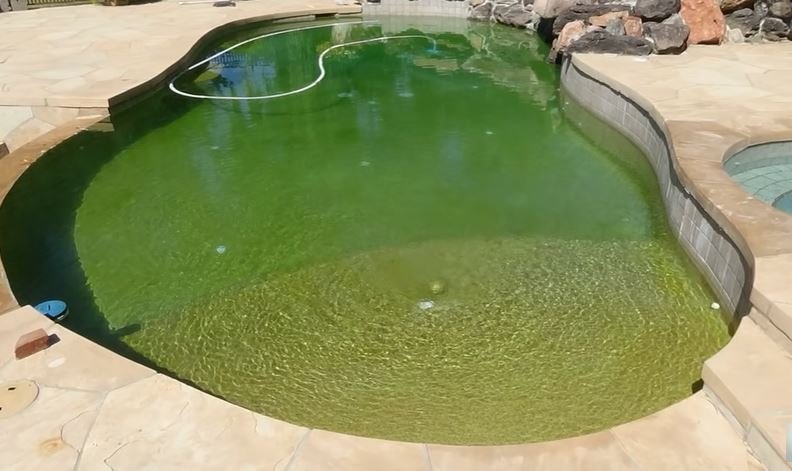
It does not die off simply because the water gets cold. Instead, it waits patiently. The moment the ice thaws and the sun hits the water, that small patch of green will explode into a massive problem. Furthermore, algae left to sit on your pool surfaces for months will begin to cause physical degradation to your pool’s interior.
What Happens If You Leave Algae in Your Pool Over Winter?
Allowing a biological contaminant to fester in your closed pool creates several distinct problems. The issues go far beyond just having ugly, green water.
Severe Surface Staining:
Algae loves to cling to the walls and floors of your pool. When left in place for months at a time, the organic matter begins to break down and seep into the pores of your pool’s finish. Plaster, concrete, and fiberglass pools are incredibly vulnerable to these organic stains.
By the time you open the pool in the spring, those green or brown spots may be permanently etched into the surface. Removing them often requires aggressive acid washing, which degrades the lifespan of your pool interior. Vinyl liners can also suffer severe discoloration that standard brushing will not remove.
Filter and Equipment Damage:
Most algae species tend to colonize in one area. However, as algae breaks apart and floats through the water, it can make its way into your plumbing and filtration system. Even if your pump is turned off for the season, residual algae left inside the pipes can harden or create stubborn clogs.
When you start your equipment back up in the spring, this dense organic matter pushes into your filter media. Sand filters become clumped and useless, while cartridge filters get coated in a thick, greasy slime that completely ruins the fabric.
A Nightmare Spring Opening:
Opening a clean pool takes just a few hours of basic maintenance and chemical balancing. Opening a pool that resembles a dark green swamp takes weeks of intensive labor. You will spend heavily on pool chemicals, running your pump around the clock, and vacuuming debris manually.
Instead of swimming on the first warm day of the year, you will be scrubbing walls and backwashing your filter repeatedly. Treating the problem now saves you from this costly and frustrating spring ritual.
How Winter Algae Affects Your Pool’s Health?
Algae disrupts the fundamental chemistry of your swimming pool. Even in cold water, algae consumes the free chlorine you added during your winterizing process. As the algae eats through your sanitizer, your pool water becomes entirely unprotected.
Once the chlorine drops to zero, other contaminants begin to thrive. Bacteria, mold, and even insects find the stagnant, untreated water to be a perfect breeding ground. Your pH levels will also fluctuate wildly as the organic matter impacts the water balance. Highly acidic water can corrode your metal fixtures and pool heater, while highly alkaline water leads to stubborn calcium scaling on your walls.
Steps to Treat Algae During the Colder Months
If you peel back your winter cover and discover an algae bloom, you need to take action. Treating algae in cold water takes a bit more effort than in the summer, but it is highly effective when done correctly.
Clean and Prepare the Pool:
Start by removing as much physical debris from the pool as possible. Use a leaf net to scoop out leaves, twigs, and bugs. Algae feeds on decaying organic matter, so removing these food sources is your first priority. Next, grab a sturdy pool brush and scrub the walls and floor vigorously. Brushing breaks the protective outer layer of the algae spores, making them vulnerable to your treatment chemicals.
Test and Balance the Water:
Cold water affects how chemical testing reagents work, so warm up your water sample indoors for a few minutes before testing. Check your pH and alkalinity levels. Chlorine works most effectively when your pH sits between 7.2 and 7.4. If your levels are off, add the appropriate pH increaser or decreaser to balance the water before moving to the next step.
Shock the Pool:
You need a massive dose of sanitizer to kill the algae bloom. Use a liquid chlorine shock rather than granular shock if your pool is exceptionally cold. Granular shock struggles to dissolve in freezing water and may settle on the bottom, bleaching your pool liner. Add the liquid chlorine according to the manufacturer’s directions for an algae treatment, pouring it evenly around the perimeter of the pool.
Circulate the Water:
Chemicals cannot do their job if they sit in one place. If your pool equipment is still winterized and you cannot run the main pump, you need an alternative way to move the water. Drop a submersible utility pump into the deep end and run the discharge hose to the shallow end. Let this run for at least 24 hours to ensure the chlorine mixes thoroughly and reaches every corner of the pool.
Add a Winter Algaecide:
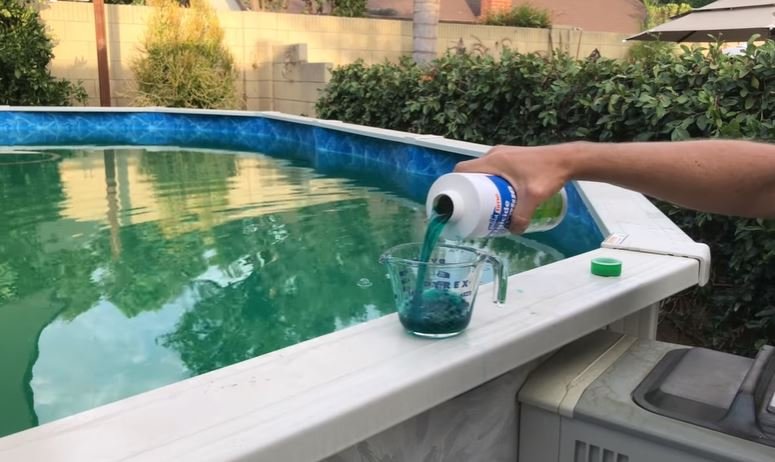
Winter algaecide are special chemicals designed to combat algae growth for at least four to five months. These chemicals work in cold water conditions and are typically added before closing your pool for the winter. Algae can still grow in cold temperatures, so adding a winter algaecide can help prevent any major algae bloom when you open your pool in the spring.
To add a winter algaecide, follow the manufacturer’s instructions on the product label. Typically, you will need to pour the recommended amount of chemical into the deep end of your pool while running your pump for maximum effectiveness.
How to Prevent Winter Algae Growth?
The most practical approach to pool maintenance is stopping problems before they start. You can easily keep your water crystal clear all winter long by following a few straightforward prevention strategies.
First, invest in a high-quality, solid winter cover. Mesh covers allow sunlight to penetrate the water, which gives algae the energy it needs to grow. A solid safety cover blocks the UV rays completely, essentially starving any rogue algae spores of light. Ensure the cover fits tightly and pump off any standing water or debris that accumulates on top throughout the season.
Second, do not ignore your pool just because it is covered. Pull back one corner of the cover every four to six weeks to inspect the water. Take a quick water sample and test your chlorine levels. If the sanitizer drops too low, add a small dose of liquid chlorine to keep the water protected.
Finally, wait until the water temperature consistently drops below 65 degrees Fahrenheit before closing the pool in the fall. Closing too early, while the water is still warm, creates a perfect incubator for algae. Similarly, aim to open your pool early in the spring before the water warms up again.
Final Thoughts on Winter Pool Care:
Accepting algae in your pool during the winter is a shortcut that always leads to bigger problems. The structural staining, equipment risks, and brutal spring cleanup are simply not worth the temporary convenience of ignoring the issue. By understanding how algae survives the cold and taking proactive steps to eliminate it, you protect your investment.
Do not wait for the spring thaw to find out what is lurking under your pool cover. Grab your water testing kit, pull back a corner of your cover, and check your pool’s balance today to ensure a clean, stress-free opening next season.
